
SAN DIEGO — In the moments that gunmen opened fire at the Islamic Center of San Diego, the actions of three men staved off an even more extensive tragedy.
Authorities say that, before they were killed, they slowed the shooters, sent out a warning and alerted police, allowing dozens of schoolchildren inside the mosque to scramble for safety.
They’re now hailed as heroes: a security guard with a winning smile, a storekeeper known for his lentil soup and the husband of a schoolteacher whose proud daughter said that when he heard gunfire, he ran toward it.
“I want to be very clear: All three of our victims did not die in vain,” said San Diego Police Chief Scott Wahl. “Without question, there would have been many more fatalities.”
All three were deeply familiar faces at the mosque, even for those who did not have personal relationships with them. Tens of thousands of dollars in donations have poured into a fundraiser set up for their families.
“We lost three pillars of our community,” the imam, or leader of the mosque, Taha Hassane, said. “We call them our martyrs and our heroes.”
Here are their stories.
Amin Abdullah, 51
Amin Abdullah was a beloved security guard who died in Monday’s shooting at the Islamic Center of San Diego. He managed to strike one of the gunmen before he was slain.
(San Diego Police Department)
Abdullah was known for his burly figure and his warm smile. The armed security guard at the San Diego mosque would greet every visitor without fail, responding “Salam wa rahamatullahi wa barakatuh” or “May the peace, mercy, and blessings of Allah be upon you too.”
He had an unwavering sense of protectiveness, family and community members said. Within hours of the shooting that rippled across Southern California’s Muslim community, Abdullah’s picture had been circulated and reposted thousands of times.
Abdullah was born in San Diego as Brian Climax but goes by his Muslim name. He converted to Islam in his late teens, during the 1990s, with several of his siblings and his mother following suit, his sister said.
He is a father of eight. Family members described him as dedicated to his children’s education and to his own learning, visiting various regional mosques and traveling abroad to study. He had the role of reciting the adhan, the call to prayer, at another mosque for some time.
He received his high school diploma but pushed his children to pursue higher degrees, and he would call his mother nightly to check up on her.
His daughter, Hawaa Abdullah, said at a Tuesday news conference that if she popped a tire while driving on the freeway, he would drop everything to make sure she was safe. He spoke to her often about the world, about faith, and, to her brothers, about how to navigate the world as young Black Muslim men.
“He was a role model, he was a best friend, he was the best dad in the whole world,” she said.
He would skip meals, worried that something bad would happen if he took a break while at work.
Abdullah had previously worked in a nearby dental office, but after the 2019 massacre at two mosques in Christchurch, New Zealand, he was inspired to switch focus and began to train himself on situational awareness and how to analyze an unfolding active shooter incident. Years later, he took a job as a security guard at the Islamic Center of San Diego.
Ismahan Abdullahi, a local Muslim leader and activist who serves as executive director of the political advocacy organization Faith Power Alliance, said Abdullah had encouraged her and other women, particularly those who wore hijabs, to learn self-defense.
He wanted men, too, to work out and be strong, in case they ever needed to defend their families, she said, and he offered frequent training for volunteers at nearby mosques that might not have the funds to hire security.
Abdullah took his job so seriously, Abdullahi said, that he would stand in the sun, always at the ready. The mosque eventually built a small shed for him as a place for respite from the heat.
“I don’t think I’ve ever seen him sit in all these years,” she said.
He loved archery, considering it a lost art, and would make his own bows that he would dole out as gifts. He saw great beauty in the natural world, often sharing photos with friends of hawks soaring over the mosque’s minaret.
His sister Angela Climax, who also goes by Aisha Muhammad, said she would follow him around as a child and the pair would play cops and robbers. She described him as “hypervigilant.”
“He was always in this mind frame of protecting,” she said. “I believe he died in the way he wanted to. But humanly, it’s hard for us to swallow the concept of, ‘I can’t pick up the phone and call my brother.’”
The San Diego police chief said Abdullah’s bravery in confronting the shooters saved lives. As the gunmen charged toward the mosque, Abdullah returned their fire, striking one of them. He reached for his walkie-talkie and called for the school to be locked down even as the gunmen forged forward, according to a witness and video reviewed by law enforcement.
When the two gunmen scoured the mosque, they only found empty rooms.
Mansour Kaziha, 78
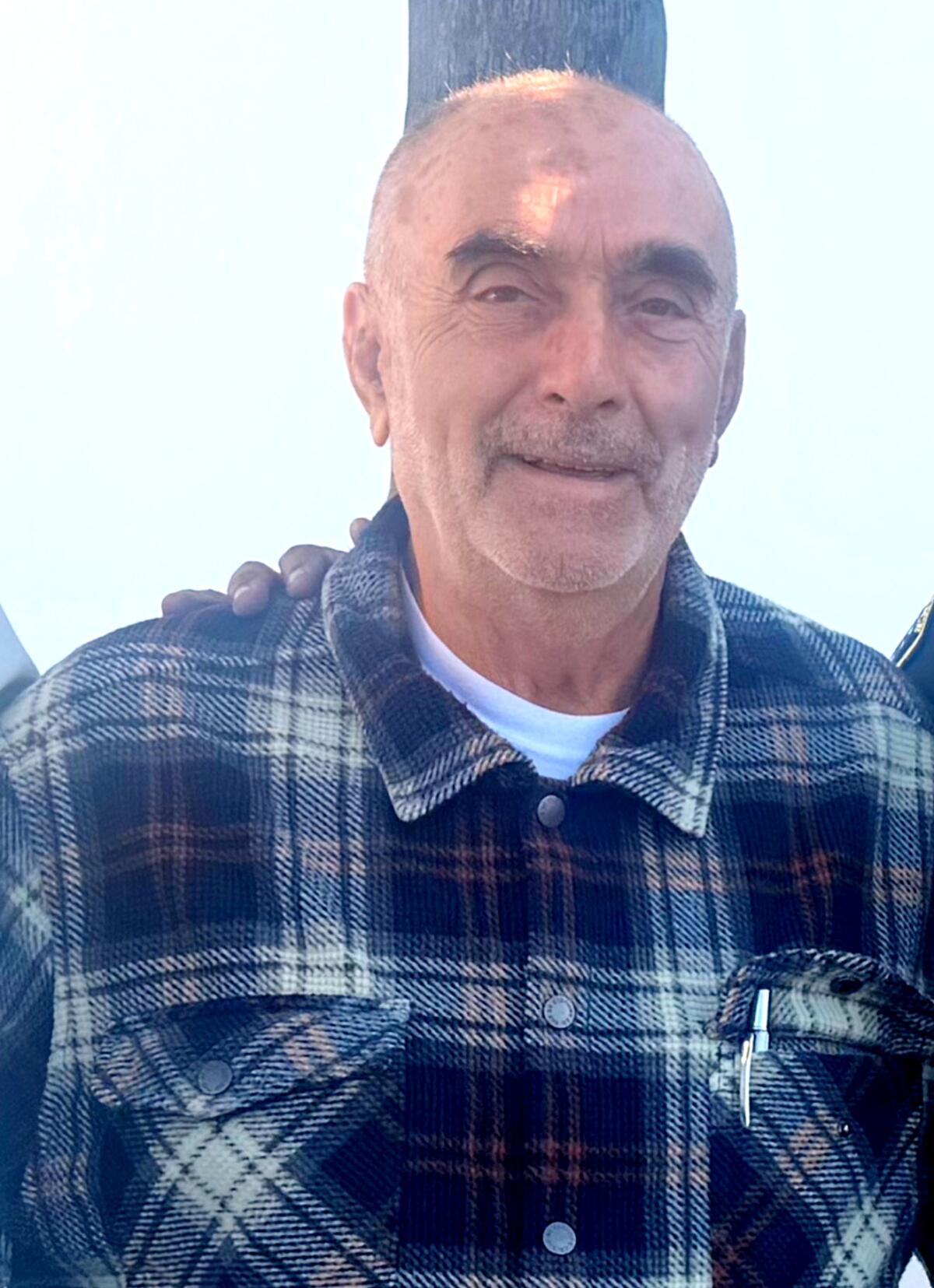
Mansour Kaziha, known in the community as “Abu Ezz,” for decades ran a store inside the Islamic Center of San Diego.
(San Diego Police Department)
Kaziha had run the gift shop inside the mosque since the facility opened more than three decades ago. But his role went far beyond storekeeper, Hassane said.
“He was the cook, the handyman, he was the caretaker,” the imam said. “He was everything.”
During holidays and the month of Ramadan, the man known in the community as “Abul Ezz” would cook a massive meal for congregants. The spread often included lamb, chicken, rice and his famous lentil soup.
Kaziha would stock the mosque’s store with books, always anticipating the community’s needs, finding introductory prayer books and Spanish translations for the mosque’s growing Latino population. He sold prayer beads, rugs and an array of snacks.
“He was always feeding us,” said Asim Billoo, 42, a counselor for youth at the mosque.
Billoo’s daughters’ favorite halal crispy rice treats were unavailable for a time due to pandemic-related supply chain issues. When Kaziha restocked, he made sure to let them know.
“My kids loved those,” Billoo said. “I couldn’t believe he had remembered.”
Kaziha came to the U.S. from Syria and had five sons and several grandchildren.
Each Sunday, early in the morning, he would deep-clean the large hall, even though the mosque had assigned custodial staff. He would fix locks and windows, check ventilation and change water filters. As he grew older, and cooking and cleaning became harder, his labor of love became a family affair, with his sons regularly helping out.
“He knew his one purpose was to serve this beautiful community,” his son Yasser Kaziha said at an event in recent days captured on video.
Kaziha was the first to call 911, Hassane said. He and another victim, Nadir Awad, had run toward the mosque and were on the phone, hiding behind cars in the parking lot, trying to reach out to police. The pair drew the shooters back outside and into the parking lot, away from the sheltering teachers and children. They were cornered and killed.
The mosque reopened to congregants on Wednesday. But the store remained closed, cordoned off with caution tape.
Nadir Awad, 57
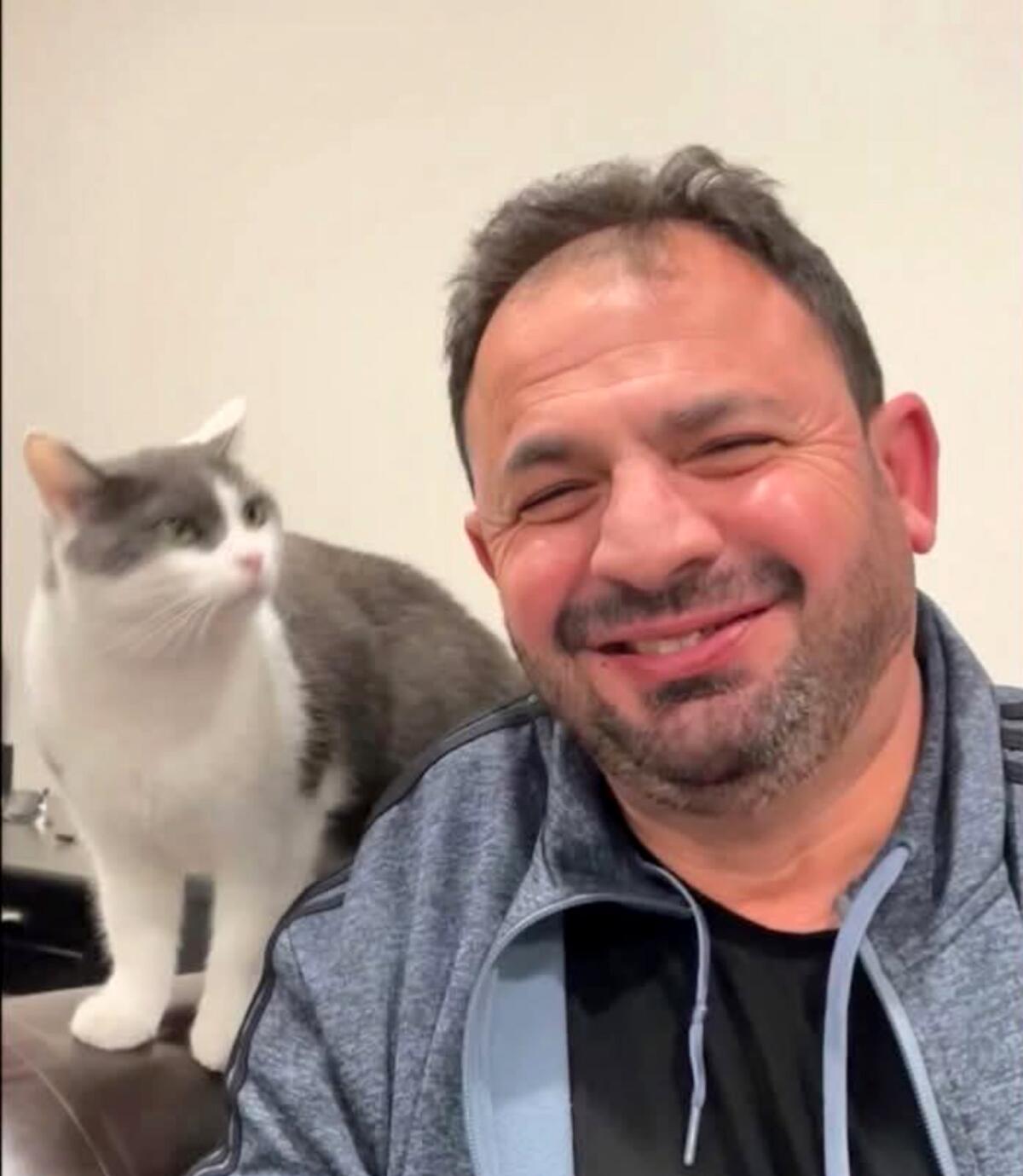
Nadir Awad, a longtime community member who was married to a kindergarten teacher at the Islamic Center of San Diego.
(San Diego Police Department)
Awad, who lived just across the street from the mosque, attended daily for prayers. His wife teaches kindergarten at the school.
Awad owned a limousine company, and his big SUV was a fixture in the area. He was thought of as the mosque’s neighborhood watch.
Family members recounted to others how he was cooking in the kitchen when he heard the gunfire. He threw off his apron and sprinted toward it. He died alongside Kaziha.
Awad’s daughter said in a social media post that he had risked his life saving her mother and others at the school.
“[H]e heard gunshots and ran over to help without hesitation,” Renad Awad wrote. “I am beyond proud of him, and beyond proud to call him my father, habibi baba.”
Abdimalik Buul, an administrative executive in California’s community college system who attended the school and grew up with Awad’s children, said Awad helped newcomers in the mosque find work and helped Buul’s own brother get a job as a driver.
Awad had an unrelenting but self-deprecating sense of humor, and he loved his wife’s knafeh, the sweet, stretchy cheese Palestinian dessert.
“He had the bubbliest smile. He would greet you from halfway across the mosque. He was an amazing soul,” Buul said.
Buul’s 8-year-old daughter was barricaded in a classroom during the shooting. He worries, he said, about his daughter growing up in such a hateful climate and “sickening culture of gun violence.”
But he was more at ease knowing the three men were there for her.
“I’m forever indebted and grateful to these three brave souls.”
Times staff writer Salvador Hernandez contributed to this report.