
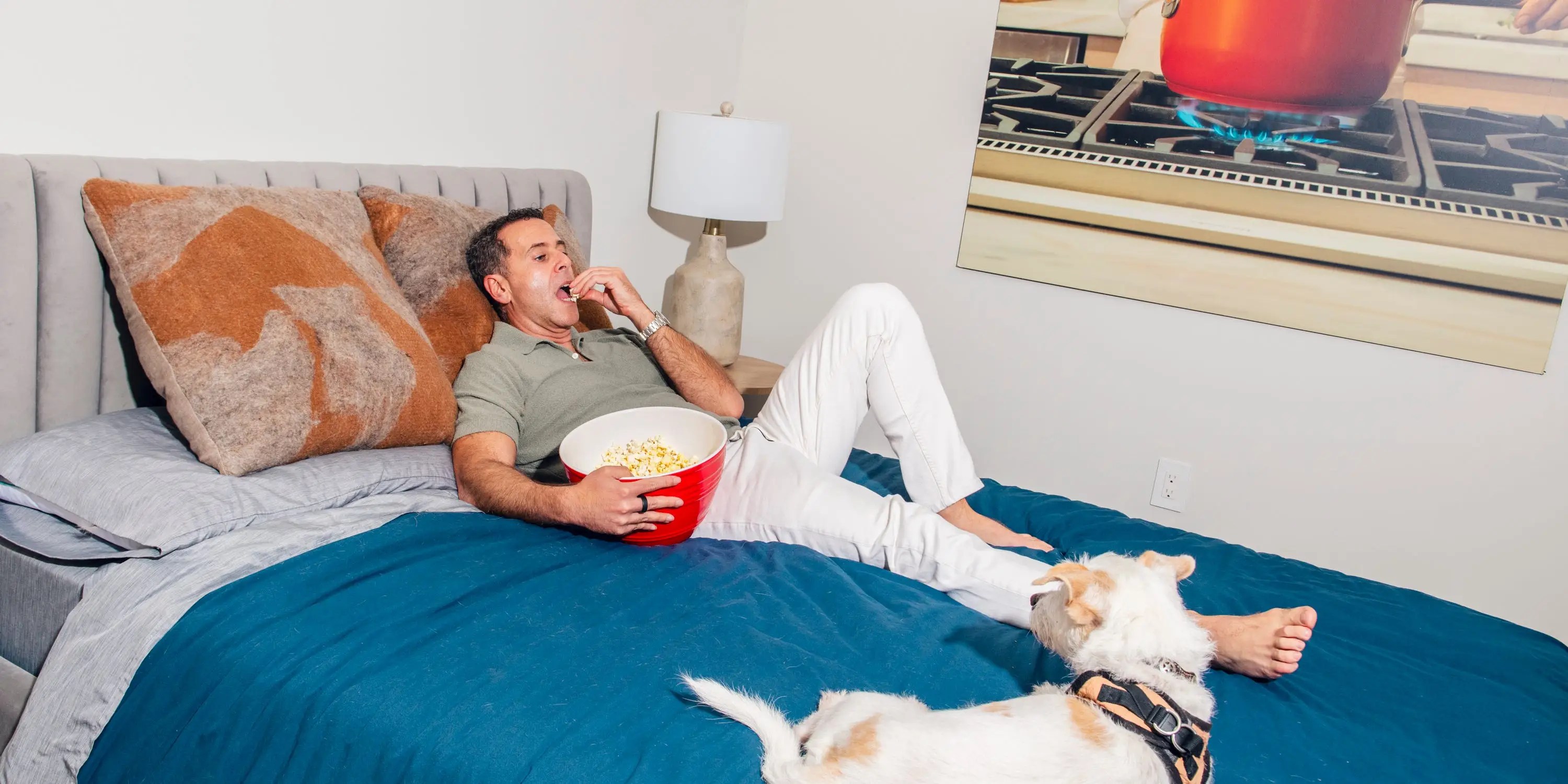
Popsmith cofounder Tal Moore beat the odds when Oprah chose his high-end stovetop popcorn popper for her coveted “Favorite Things” list.
Moore said an Oprah Daily editor told him the team reviews about 15,000 products a year before Oprah makes her final picks. In 2024, the Popsmith popper made the cut.
Within weeks of the list’s release, his company sold out of every popper.
Business Insider asked the serial entrepreneur how he built a product people don’t just buy, but rave about.
Born from passion — and data
Before Popsmith, Moore and his business partner ran a portfolio of e-commerce brands that sold a variety of things, including gumballs, chocolate, and popcorn machines, but only one category really held their interest: popcorn.
They sold off all of their online businesses to go all in on kernels. Specifically, they wanted to build a stovetop popper.
They also had proof there was demand.
“Our No. 1 selling popcorn popper at that point was a stovetop popcorn popper that we were getting from another supplier,” Moore said. “We thought, there’s a market for stovetop popcorn popping, but a more elevated experience.”
They wanted to create a premium product aimed at the kind of customer who shops at Williams Sonoma or Crate & Barrel: someone who loves hosting, cares about quality, and wants durable, heirloom-style cookware.
“Nobody had developed something like that in popcorn,” he said. “Most of the popcorn poppers in the market are very carnival kitsch.”
The 3 reasons his product hit
Moore said the Popsmith popper’s appeal comes down to three things: aesthetics, experience, and flavor.
People who invest in their homes care deeply about how things look, especially in a world shaped by social media, he said: “It’s a flex for people to show off a cool, unique, innovative appliance that nobody’s ever seen.”

Jason LeCras for BI
Then there’s the experience aspect. As he puts it, “nobody is making memories in a microwave.”
With a stovetop popper, “you hear the popcorn popping and sizzling, you smell the steam coming out, wafting through your kitchen,” he said. “You see it, you taste it, you touch it, and so people gather around in the kitchen and have this shared nostalgic experience.”
And finally, flavor. Moore said the popper makes authentic, movie-theater-style popcorn exceptionally well.
He invested millions of dollars and years into the product
Popsmith was expensive and time-consuming to build. Moore said it took two years to develop the popper and about $3.5 million to launch the brand.
A large share of that money went toward branding and design.
“We spent months just talking through and really understanding, what is this brand? Because every brand has a soul. Every brand has an identity,” he said, and they wanted Popsmith to feel polished and distinctive, from day one.
“We wanted to go to market looking like a $100 million brand.”
Moore wouldn’t necessarily recommend the same route to all founders.
“The safer approach is to get a minimum viable product to market and evolve it,” he said.
It was risky to invest so much time and money before launching, and Popsmith was weeks away from running out of money, but he also believes their decision helped the brand land major retail partners and high-profile exposure early on.
“I don’t think that we would have gotten into Crate & Barrel, Williams Sonoma, Sur La Table, and Oprah’s Favorite Things in year two without doing all that preliminary work,” he said.
Start by making one really good product — then expand
Moore’s broader advice for entrepreneurs is to start by creating one really good product.
“I’m of the opinion that money is in the niche, and you want to stay very, very focused,” he said, pointing to direct-to-consumer brands that started by doing one thing especially well before expanding: Bonobos with trousers, Everlane with T-shirts, and Harry’s with razors.
The strategy, he said, is to earn trust in one category first. Once customers see you as an authority, it becomes easier to introduce new products.
That’s the playbook Popsmith is following now.
“We want to earn consumers’ trust that we are the authority in the popcorn space,” Moore said. “We want to do it in a really cool, innovative way with a product that they’ve never seen.”