
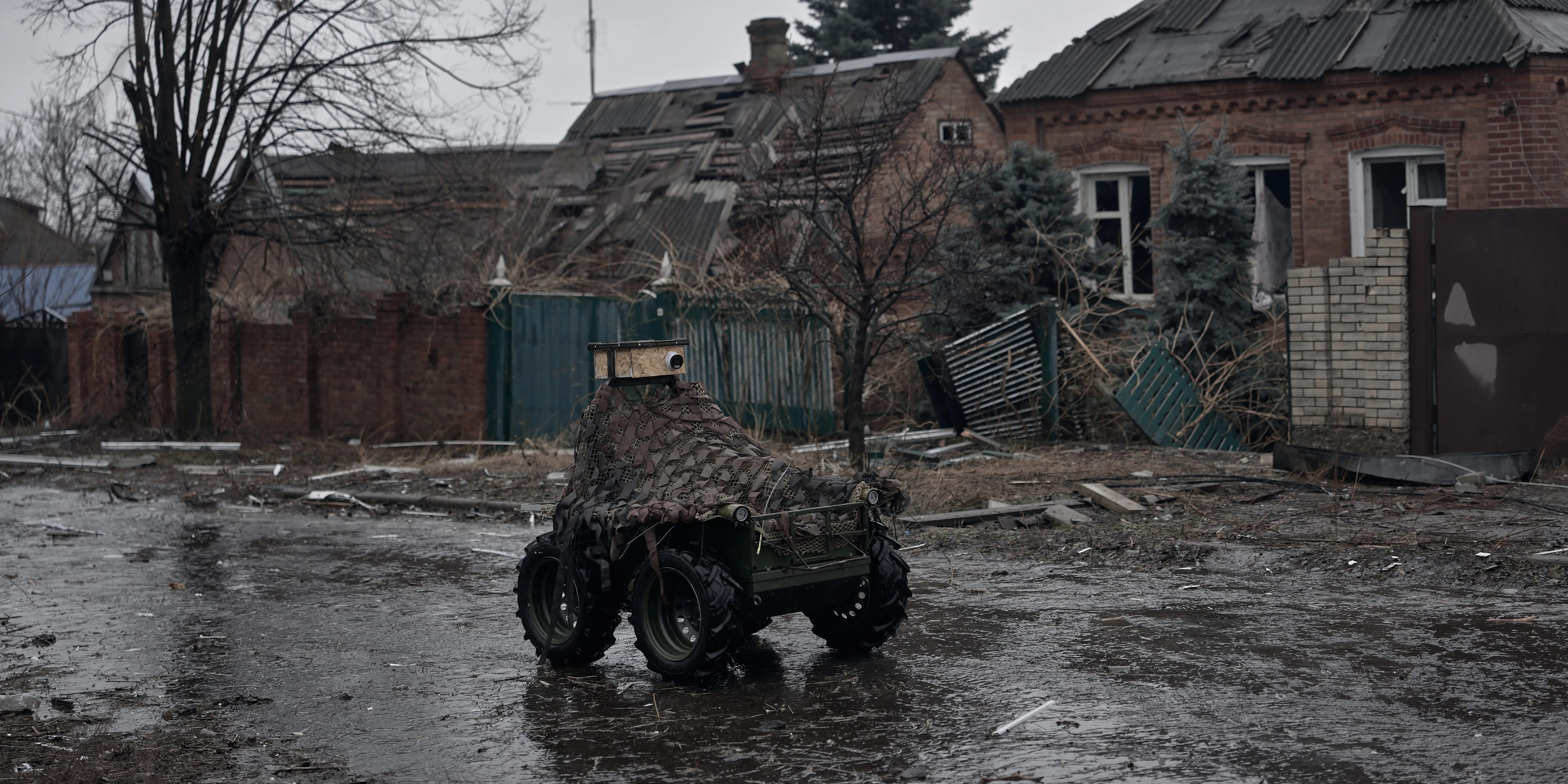
An electric vehicle tax that came into force this year inadvertently cost Ukraine thousands of ground drones it needs on the front lines, the CEO of a major defense trade association said.
Had the 20% value-added tax, which went into effect in January, not been introduced, Ukraine’s military could likely have bought 5,000 more uncrewed ground vehicles in the first half of 2026, said Ihor Fedirko, the CEO of the Ukrainian Council for Defense Industry.
“We know that our government is procuring 25,000 in the first half of this year. If they could procure 20% more, that’s 5,000,” Fedirko told Business Insider. “For our armed forces, that’s a lot.”
The new tax also threw the local ground drone industry and military into disarray at the start of the year, causing contracts to dry up for months and several major manufacturers to nearly go out of business, he added.
Ukrainian lawmakers are now racing to undo the tax, with some politicians saying it’s handicapped a key war industry that Kyiv is trying to rapidly expand.
Nina Yuzhanina, a lawmaker for Ukraine’s European Solidarity party, said in a statement last week that the EV tax “almost ceased” the supply of ground drones to the military in some areas.
She and 44 other Ukrainian parliamentarians introduced a bill on May 19 aiming to fix the core issue: because uncrewed ground vehicles, or UGVs, are so new, they were lumped together with EVs by the country’s trade standards. The new law would define the drones as a separate good, exempting them from the 20% tax.
The bill is set for discussion over the next two weeks, but Fedirko estimates that if the law passes immediately, it would still take about two months for its effects to fully trickle down and restore production.
That comes as Ukraine’s defense ministry said it plans to buy a total of 50,000 ground drones by the end of the year. Ukrainian UGVs can cost between $5,000 to $100,000 apiece, depending on the type of system and the gear it’s equipped with.
“The exemption would save more than eight to 10 billion hryvnias, which is about $200 million,” Fedirko said of the tax’s impact on the local industry. “For us, it’s a huge number.”
How Ukraine began taxing its own war production
This year’s VAT on ground drones is unusual for Ukraine. Under martial law, most of the country’s war industries aren’t subject to any such taxes.

Alex Nikitenko/Global Images Ukraine via Getty Images
This sort of consumption tax is collected at every step of the supply chain, but is typically eventually passed on to the end consumer — in this case, Ukraine’s own military.
Ground drone manufacturers didn’t actually have to worry about the tax until recently; Ukraine had been exempting EV duties since 2018.
But that exemption expired on January 1.
Military procurers found that their ground drone budgets needed to be 20% higher, but initially were confused by the new process because defense equipment and weapons are exempt from VAT by default, Fedirko said.
Amid the turmoil, drone makers couldn’t find state contracts — the lifeblood for major manufacturers — for three months, he added.
“Three months without procurement, that’s crazy. It’s impossible to live without it,” Fedirko said.
Production chaos while at war
The Ukrainian defense ministry highlighted the bottleneck in April, saying it was working quickly to “unblock” contracts and speed up deliveries.
But local firms had struggled to stay afloat in the meantime. A 20% cut to a firm’s budget, in an industry already desperate for financing, can be a killer blow.
The new VAT also adds weeks of bureaucratic delay for an industry at war, with firms having to loop in state tax services and meticulously document the procurement process.
Fedirko said some firms may have had to drop capacity to a third of last year’s to stay solvent, with cuts to employees or engineers.
A few tried to reclassify their drones as tanks or armored vehicles, while others sold their UGVs to volunteer organizations such as ComeBackAlive, which supplies military units on an ad hoc basis.
Tencore, the manufacturer of the popular tracked TerMIT drone, said it had to rely on these volunteer organizations when it couldn’t find state contracts for five months.
Chris McGrath/Getty Images
“For UGV manufacturers, the VAT issue was not an accounting detail,” the firm told Business Insider. It works with the Ukrainian Robotics Force association, which falls under Fedirko’s UCDI umbrella.
A fix six months in the making
It’s taken Ukraine this long to address the tax problem because military ground drones were so new that lawmakers had trouble defining them, Fedirko said. European Union commodity rules, on which Ukraine bases its own goods classifications, also don’t have clear specifications for these uncrewed systems.
Though ground drone procurement resumed in the spring, manufacturers like Tencore say the months of delay have already cost frontline troops the equipment they need.
“For Ukraine, six months feels like infinity,” Fedirko said.
When reached by Business Insider, the defense ministry declined to comment on the parliamentary bill introduced last week, saying it’s not allowed to influence its consideration or debate.
However, it said Ukraine’s UGV industry has so far grown to over 280 companies, with 550 types of drones for sale.
As the war moves into its fifth year, Ukrainian troops are increasingly relying on these platforms to conduct missions on the front lines, including logistics, evacuations, and attacks on Russian positions.
Ukrainian President Volodymyr Zelenskyy said in April that his forces had used ground drones to carry out over 22,000 missions in the first three months of 2026 alone.